What the IRS announcement means for January 2025 payments
The IRS confirmed a direct deposit program scheduled for January 2025 that will send $2,000 payments to eligible recipients under a new tariff rebate plan. This article explains how the rebate program works, who is likely to qualify, and practical steps to prepare for the payment.
How the tariff rebate plan works
At a high level, the tariff rebate plan uses revenue collected from tariffs to fund one-time rebate payments. The IRS will act as the distribution agent, matching eligibility records to direct deposit information on file.
The process generally follows these steps:
- Legislation or an executive directive authorizes rebates funded by tariff collections.
- Federal agencies provide eligibility rules and data to the IRS.
- The IRS verifies taxpayer records, confirms bank details, and schedules direct deposits.
Timeline and payment method for the $2,000 direct deposit
The confirmed payment date is January 2025. Direct deposits are prioritized for people with current bank account information on file with the IRS.
If the IRS cannot direct deposit, alternative delivery methods may include mailed checks or prepaid cards, depending on guidance issued before the payment date.
Who qualifies for the IRS January 2025 $2,000 direct deposit
Eligibility is set by the governing law and IRS rules. Common eligibility factors for rebate programs include income thresholds, filing status, and Social Security or taxpayer identification status.
Typical eligibility checks the IRS may perform include:
- Most recent tax return or non-filer registration
- Adjusted gross income within defined limits
- Citizenship or resident status as specified by the legislation
Examples of provisional eligibility criteria
While specific criteria are set by the authorizing measure, rebate programs often follow these examples:
- Full payment to taxpayers below a certain AGI threshold.
- Reduced payment or phaseout for higher incomes.
- Household-based calculations where dependents affect payment amounts.
The IRS generally uses bank account details from the latest tax return or recent IRS interactions for direct deposits. Updating your information now can speed delivery if you qualify.
How to prepare: Steps to take now
Follow these practical steps to increase the chance of receiving the January 2025 deposit directly and without delay.
- Check your IRS account online to confirm your mailing address and direct deposit details.
- If you did not file a 2023 or 2024 return, follow IRS guidance for non-filer registration or file a simple return if required.
- Monitor official IRS announcements and the Department of Treasury guidance for final eligibility rules and timelines.
How to update bank information with the IRS
The IRS accepts direct deposit details via the bank account section on an e-filed tax return or through your IRS online account for certain transactions. Do not send bank details by email or social media.
If you prefer a mailed check, confirm your mailing address in the IRS account and be aware of potential delays.
What to expect on your bank statement
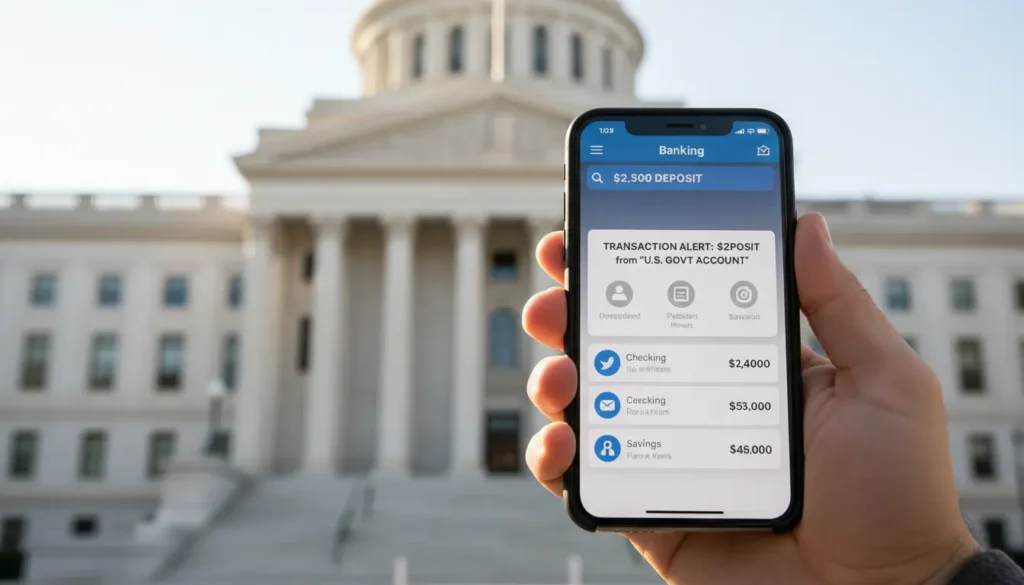
Direct deposit entries typically show as a payment from the U.S. Treasury or IRS. Expect a short descriptive line; the exact wording varies by bank. Save the notice or statement line in case you need to reference the payment later.
If you see nothing by early February, check the IRS online account or the official IRS payment page before calling the IRS phone lines, which may be busy.
Tax treatment and reporting
Whether the $2,000 is taxable depends on the law that authorized the rebate. Some rebates are treated as non-taxable government transfers, while others may require reporting.
Wait for IRS guidance on tax treatment before assuming tax-free status. The IRS will issue reporting instructions if recipients must include the rebate on a future return.
Common questions and answers
- What if I changed banks? Update your account on the latest tax filing or through your IRS online account, if available.
- Will children or dependents affect the amount? The law may include dependents in calculation rules. Check official guidance for dependent credits or additions.
- Can non-filers claim the rebate? Many rebate programs offer a registration path for non-filers. Follow the IRS announcement for a dedicated non-filer portal if provided.
Real-world example
Case study: Maria, a single parent, filed a 2024 tax return and listed her bank account for refunds. Her 2024 adjusted gross income fell below the program threshold. After the IRS announcement, she checked her IRS online account and confirmed her bank information and address.
Result: Maria received the $2,000 direct deposit in mid-January 2025. She saved the bank statement entry and the IRS notification email for her records. Her example shows the value of confirming account details and monitoring official IRS updates.
What to watch for in IRS communications
Only rely on official IRS channels: IRS.gov, mailed notices, and verified IRS social media accounts. Watch for:
- Final eligibility rules and definitions
- Exact payment timing and any phased delivery schedule
- Instructions for non-filers and those with changed bank accounts
Final checklist before January 2025
- Confirm or update bank account details in your most recent tax filing or IRS account.
- Keep a copy of recent returns and proof of identity accessible.
- Bookmark the IRS rebate information page and check it weekly for updates.
Following these steps will reduce delivery delays and help you respond quickly if additional verification is needed. The IRS direct deposit will simplify receipt for many taxpayers, but preparation ensures you do not miss the payment or face avoidable delays.