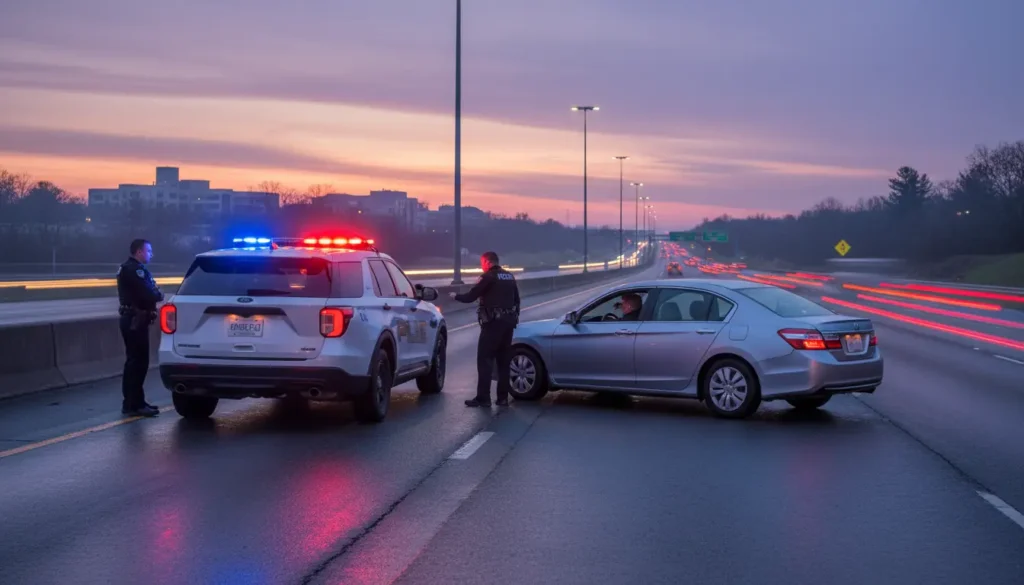
The New January Driving Law 2026 brings updated penalties and criminal provisions for certain traffic offenses. This article explains what changes, who is affected, and how to avoid costly fines or jail time.
What the New January Driving Law 2026 Changes
The law expands penalties for repeat offenses and for specific behaviors such as driving without insurance, reckless driving, and tampering with safety equipment. It also clarifies when prosecutors can bring criminal charges rather than civil citations.
States will implement the federal guidance variably, so exact enforcement differs across jurisdictions. Still, the baseline is stronger penalties and clearer pathways to jail time for serious or repeated violations.
Key provisions in the New January Driving Law 2026
- Higher maximum fines for repeat violations
- Mandatory minimum fines for driving without valid insurance
- Expanded definitions of reckless and dangerous driving
- New criminal penalties for tampering with vehicle safety equipment
- Broader conditions under which driving offenses trigger jail time
Who Faces Fines and Jail Time Under the New January Driving Law 2026
The law targets drivers with repeated, risky, or negligent behaviors. It is particularly aimed at those who:
- Drive uninsured after prior warnings or citations
- Commit reckless driving that results in significant property damage or bodily harm
- Intentionally disable or remove safety devices like airbags or emissions controls
- Repeatedly violate traffic laws within a short timeframe
First-time minor offenses generally remain civil infractions, but multiple minor offenses may escalate under the new standards.
Examples of behavior now more likely to result in criminal charges
- Third uninsured-driving citation within 24 months
- Reckless driving resulting in a severe injury or high-dollar damage
- Removing or altering safety equipment to bypass inspections
Under the New January Driving Law 2026, some states require immediate license suspension upon a second uninsured-driving citation, even before a court hearing.
Practical Steps to Comply With the New January Driving Law 2026
Follow a simple checklist to reduce the risk of fines or jail time. Prevention is often far cheaper and less disruptive than contesting a charge.
- Keep valid insurance and carry proof in the vehicle at all times.
- Fix any safety equipment issues promptly and get documented repairs.
- Drive within speed limits and avoid aggressive maneuvers that may be read as reckless driving.
- Respond to citations and court notices immediately rather than ignoring them.
- Consult an attorney if you face repeated citations or a possible criminal charge.
If you receive a citation under the New January Driving Law 2026
Do not assume it is only a fine. Check the citation details and the specific state implementation. Note the date of the offense, the exact violation code, and whether it’s marked as civil or criminal.
Consider these steps:
- Photograph the citation and relevant vehicle documents.
- Contact your insurer to confirm coverage records.
- Seek legal advice quickly if the citation mentions jail or felony-level penalties.
Penalties Explained: Fines, License Actions, and Jail Time
Penalties can include higher fines, points on your license, mandatory education programs, license suspension, and in severe cases, jail time. The law creates clearer triggers for escalating penalties.
Typical penalty progression under the new framework:
- First offense: Higher civil fines and required corrective action
- Second offense: Increased fines, possible license suspension, enrollment in remedial programs
- Third or aggravated offense: Criminal charges, potential jail time, and larger restitution orders
How long can jail terms be?
Jail terms vary by state and by the severity of the offense. Minor criminal traffic convictions may carry short jail sentences (days to months), while aggravated cases involving injury could lead to longer terms and felony records.
Small Case Study: One Driver’s Experience
In January 2026, a suburban driver in State X received a third uninsured-driving ticket within 18 months. The first two tickets resulted in fines and warnings. This third citation triggered a criminal process under the updated state rules aligned with the New January Driving Law 2026.
The driver faced higher fines, a 30-day license suspension, and a court appearance. After proving insurance coverage and completing a remedial driving course, the judge reduced the penalty to community service and a fine. The case shows how documentation and prompt corrective action can affect outcomes.
Common Questions About the New January Driving Law 2026
Below are quick answers to frequent concerns. Always check your state DMV and local statutes for specifics, because implementation details vary.
- Q: Will every state enforce jail time the same way? A: No. Enforcement and exact penalties differ by state.
- Q: Can a minor equipment violation lead to jail? A: Usually not by itself, but tampering or repeated violations can escalate to criminal charges.
- Q: Should I get a lawyer? A: Consult one if you face repeated citations or a possible criminal charge.
Final Points: Stay Informed and Proactive
The New January Driving Law 2026 increases risks for repeat and severe driving offenses. The best defense is prevention: maintain insurance, keep your vehicle safe and legal, and address tickets promptly.
Check your state DMV website for implementation updates and seek legal advice if you face charges that could lead to jail time. Staying informed and acting quickly will minimize consequences and help you remain a safe, compliant driver.