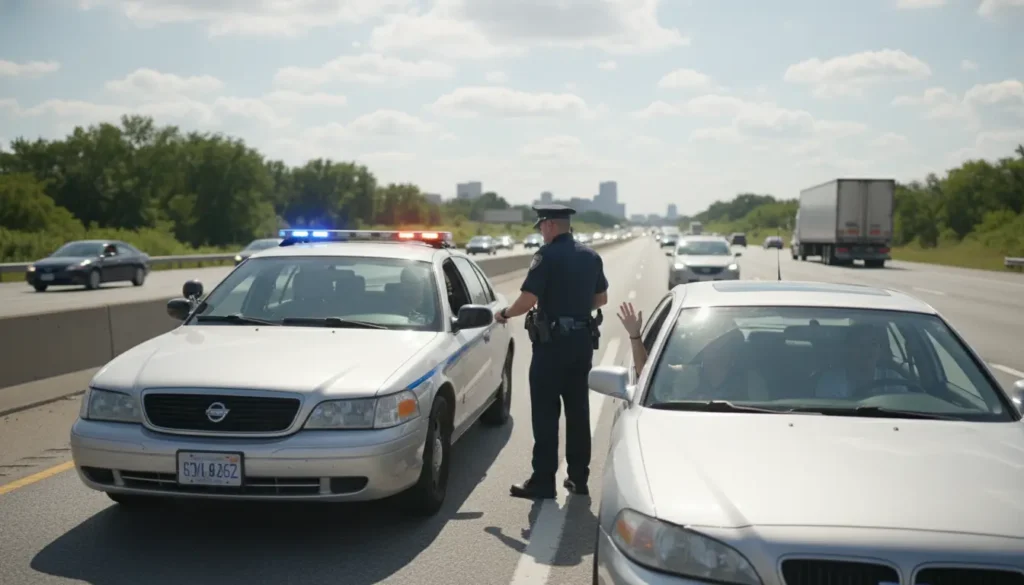
Starting in January, a uniform driving law went into effect across all 50 states that creates criminal penalties for certain driving behaviors. This article explains what the law does, who it affects, and how to avoid jail time and fines up to $1,500.
What the New January Driving Law in All 50 States Means
The law establishes a baseline of criminal penalties for specific driving offenses that states have adopted or updated. It targets behaviors the model seeks to deter and creates clearer consequences for violations.
Penalties include possible jail time and fines that can reach $1,500 depending on the offense, prior records, and local sentencing rules.
Which offenses are covered
States adopted the baseline to cover a set of serious or repeat offenses. Common items include:
- Distracted driving that causes injury
- Driving without insurance after causing an injury
- Repeat reckless driving or excessive speeding
- Hit-and-run incidents with property damage or injury
How Jail Time and $1,500 Fines Are Applied
Not every violation automatically triggers jail or the maximum fine. Prosecutors and judges consider the seriousness of the incident, prior convictions, and mitigating circumstances.
Typical application looks like this:
- First-time minor violations: civil fines and points on a license.
- Serious incidents (injury, death, or hit-and-run): misdemeanor or felony charges with possible jail.
- Repeat or aggravated offenses: higher fines up to $1,500 and longer jail terms.
Example penalty ranges
While states set exact sentences, standard ranges include:
- Misdemeanor: up to 12 months in jail and fines up to $1,500.
- Aggravated or felony-level offenses: longer prison time and higher fines or restitution.
Who Is Most Affected by the New Law
Drivers who engage in high-risk behavior or repeatedly violate traffic laws are most at risk. Commercial drivers and people with prior convictions face increased scrutiny.
Insurance status also matters: driving without required insurance after an incident can escalate a ticket into criminal charges under the new baseline.
Scenarios that commonly trigger criminal charges
- Causing an accident while texting and sustaining injuries to others.
- Fleeing the scene of a crash that resulted in property damage or bodily harm.
- Multiple speeding convictions that demonstrate a pattern of reckless driving.
Practical Steps to Avoid Jail Time and Fines
Follow these steps to reduce the chance of criminal penalties under the new law.
- Always carry proof of insurance and renew it on time.
- Use hands-free options or pull over to avoid distracted driving.
- Obey speed limits and traffic signals; slow down in neighborhoods and work zones.
- If involved in a crash, stop, render aid when needed, and exchange information.
- Consult an attorney immediately if charged; criminal penalties are different from traffic tickets.
What to do if you receive a citation
Review the citation carefully and note the alleged violations and instructions. Some violations can be resolved through traffic school or plea agreements; others require criminal defense.
Document the scene with photos and witness information if safe to do so. This evidence can be important if the case escalates to criminal court.
Many states use model language from national safety organizations to craft consistent driving laws, which is why similar penalties are showing up across all 50 states.
Small Real-World Example
Case study: In January, a driver in a midwestern city ran a red light and struck another vehicle. The victim suffered minor injuries, and the driver had a prior speeding conviction.
Because the jurisdiction applied the new baseline, prosecutors upgraded the charge to a misdemeanor with possible jail time. The driver faced a fine near $1,200 plus court costs and a license suspension. Legal counsel helped negotiate a plea that included community service and a reduced fine.
How State Differences Still Matter
Even with a national baseline, each state implements the law through its own statutes and court rules. This means penalties, diversion programs, and thresholds for criminal charges vary.
Check your state DMV or the state legislature’s website to see the specific language adopted and any local exceptions or programs.
Where to find reliable information
- State department of motor vehicles (DMV) or equivalent agency
- Official state legislature websites for the enacted statute
- Local legal aid organizations and state bar associations for guidance
Final Practical Advice
Take the new law seriously, but know that not every ticket leads to jail. The key is prevention: safe driving habits, valid insurance, and prompt legal help if charged.
Document incidents and follow court instructions. If in doubt, consult a traffic or criminal defense attorney familiar with your state’s recent changes.